
Angelia Seyfferth

Arizona State University School of Life Sciences [email protected]
Allison Pease

Arizona State University School of Earth and Space Exploration [email protected]
Christine McCarthy

Columbia University Department of Earth and Environmental Sciences [email protected]
Kimberly Lau

Penn State University Department of Geosciences [email protected]
Postdoctoral Research Associate in Microbe-Mineral Interactions at NSLS-II, Brookhaven National Laboratory
The Bioimaging Team at the National Synchrotron Light Source II (NSLS-II) invites applications for a Postdoctoral Research Associate to investigate microbe–mineral interactions with a focus on critical minerals. This position offers a unique opportunity to integrate advanced synchrotron-based imaging and spectroscopy with multi-omics approaches (genomics, transcriptomics, proteomics) to uncover molecular mechanisms governing microbial transformations of […]
AGU26 Abstract Submissions Open
Abstract submissions are now open for the 2026 AGU Annual Meeting, taking place December 7–11, 2026, in San Francisco, CA. The abstract submission deadline is August 5, 2026 (11:59 PM EDT / 03:59 UTC). AGU’s annual meeting, the largest gathering of Earth and space scientists, convenes 25,000+ attendees from 100+ countries to share research, connect, […]
Cross-Facility Collaboration on Soft and Tender X-ray Microscopy
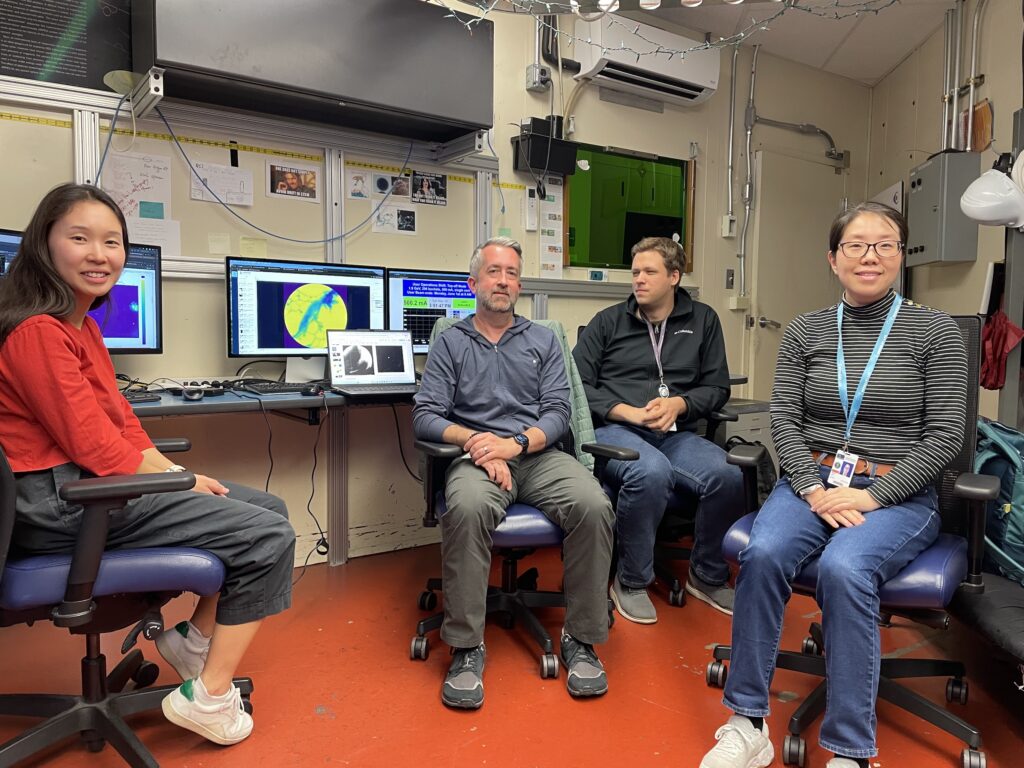
Beamline scientists from SEES, the Advanced Light Source (ALS), and the National Synchrotron Light Source II (NSLS-II) connected during SEES general user beamtime at COSMIC. They discussed coordination opportunities for the upcoming ALS-U dark time and future capabilities of the Soft X-ray Nanoprobe at NSLS-II. Left to right: Dr. Kyounglim Kang (SEES–ALS Affiliate Beamline Scientist), […]
Earth Science Associate Program Director, U.S. National Science Foundation
The U.S. National Science Foundation has announced a call for Permanent Associate Program Directors at the AD-3 level (https://www.usajobs.gov/job/873053600), and there is an opportunity to hire within the Earth Sciences Sections of the Directorate for Geosciences (https://www.nsf.gov/geo). Applications are open until June 22 but are expected to close sooner due to demand. A second posting […]
Intergovernmental Personnel Act (IPA) Assignment Opportunities at the U.S. National Science Foundation, Directorate for Geosciences (NSF GEO)
The U.S. National Science Foundation Directorate for Geosciences (NSF GEO) is seeking highly qualified individuals interested in serving in science, technology, engineering and mathematics positions through the Intergovernmental Personnel Act (IPA) Program. Through IPA assignments, individuals from academic institutions, nonprofit organizations and other entities can contribute their expertise while gaining valuable federal experience supporting national science and engineering priorities. NSF GEO invests in projects that […]
Arsenic-cycling metabolism recorded in hot spring silica deposits
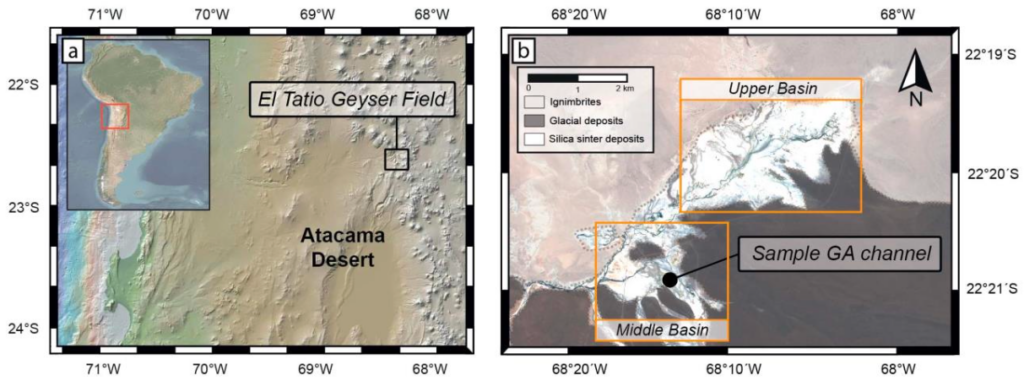
Slagter, Silvina, Kimberly Myers, Diego M. Guido, Bhoopesh Mishra, Thaïs Couasnon, Gernot Arp, Stefan V. Lalonde, and Mark A. Van Zuilen. Communications Earth & Environment (2026).